看短片學英文片語
上司說一句地道英文,Peter 卻照字面去做,結果每次都闖禍。先看短片笑一笑,再看下面的詳細解釋:真正意思、由來、甚麼時候用、例句和常見錯誤。
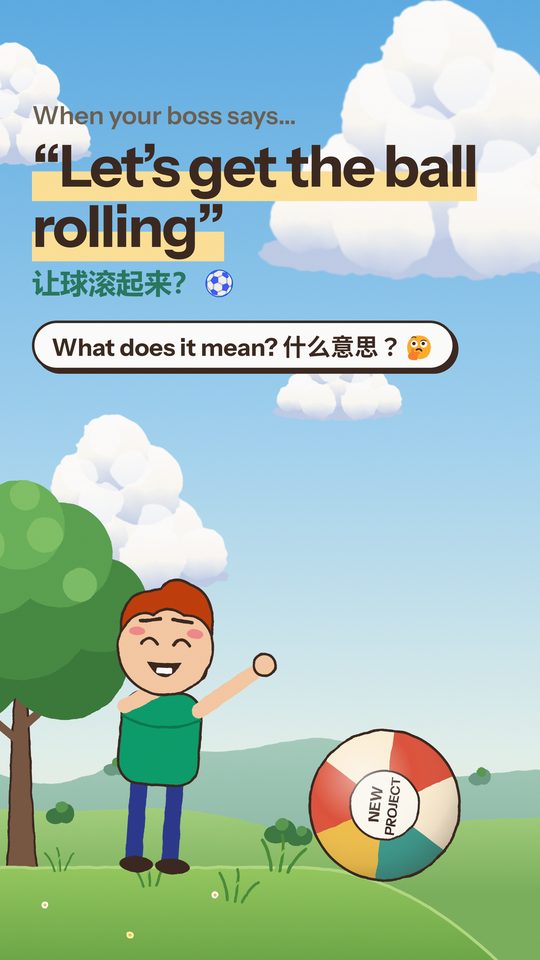
get the ball rolling
/ɡet ðə bɔːl ˈrəʊlɪŋ/
= 開始做某件事,帶頭啟動
短片內容
上司說新項目今天開始:Let’s get the ball rolling! Peter 真的把一個寫著 NEW PROJECT 的大球推下山。上司問項目在哪裡,他指著遠處還在滾的球說:「在那邊,還在滾呢!」
真正意思
想像一個球:最難的是推出第一下,一旦滾起來就會自己繼續向前。做事也一樣,最難的是開始。所以 get the ball rolling 就是踏出第一步,令事情動起來。
常見的說法是,這句話和十九世紀美國選舉有關,當時支持者會推著巨大的球遊行。不過今天用它時,已經和球沒有關係。
甚麼時候用
開會、開展新項目或大家都在等人先開始時最常用。語氣輕鬆積極,同事之間和對上司都可以用。如果要說「繼續保持下去」,就用 keep the ball rolling。
例句
- Let’s get the ball rolling on the new project.
我們開始做新項目吧。 - Who wants to get the ball rolling with the first idea?
誰想先分享第一個想法? - I’ll send the first draft today to get the ball rolling.
我今天先發第一稿,讓事情開始運作。
常見錯誤
✗ Let’s roll the ball on this project.
✓ Let’s get the ball rolling on this project.
片語的字不可以隨意調換。roll the ball 只是「滾球」,要說「開始」就要用完整的 get the ball rolling。
近義說法
- kick things off 開始:語氣同樣輕鬆,特別常用於會議和活動的開場。
- get started 開始:最簡單直接,任何場合都可以用。
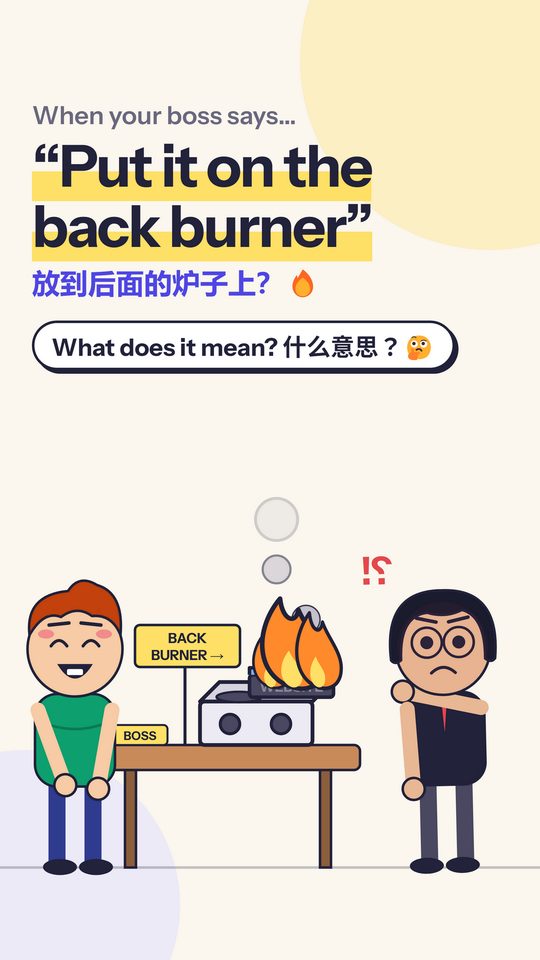
put it on the back burner
/pʊt ɪt ɒn ðə bæk ˈbɜːnə/
= 先放一放,以後再處理
短片內容
上司說網站項目不急:Put it on the back burner. Peter 就把寫著 WEBSITE 的文件夾放到爐子後面的爐頭,還開了火。上司回來時,項目已經燒起來了。
真正意思
back burner 是爐子後面的爐頭。煮飯時,最重要的菜放在前面,要慢慢煮的放在後面,不用一直看著。
所以把事情 put on the back burner,就是暫時不處理,先做更重要的事。要留意:事情沒有被取消,只是不優先。
甚麼時候用
討論工作優先次序時最常用,語氣中性。如果一件事很重要、很快要做,就是 a front-burner issue。如果想說完全放棄,不要用這句,要說 drop it 或 cancel it。
例句
- Let’s put this idea on the back burner for now.
這個想法我們先放一放。 - The redesign is on the back burner until after the launch.
重新設計要等產品推出後才處理。 - I had to put my studies on the back burner while I was working full-time.
全職工作期間,我只好暫時把學業放下。
常見錯誤
✗ We cancelled the plan, so it’s on the back burner.
✓ We’ve put the plan on the back burner until next year.
on the back burner 不是取消,而是押後。計劃仍然存在,只是以後才做。
近義說法
- put a pin in it 先擱置:多用於對話或會議中,指稍後再談。
- put on hold 暫停:較正式,常用於項目和訂單。
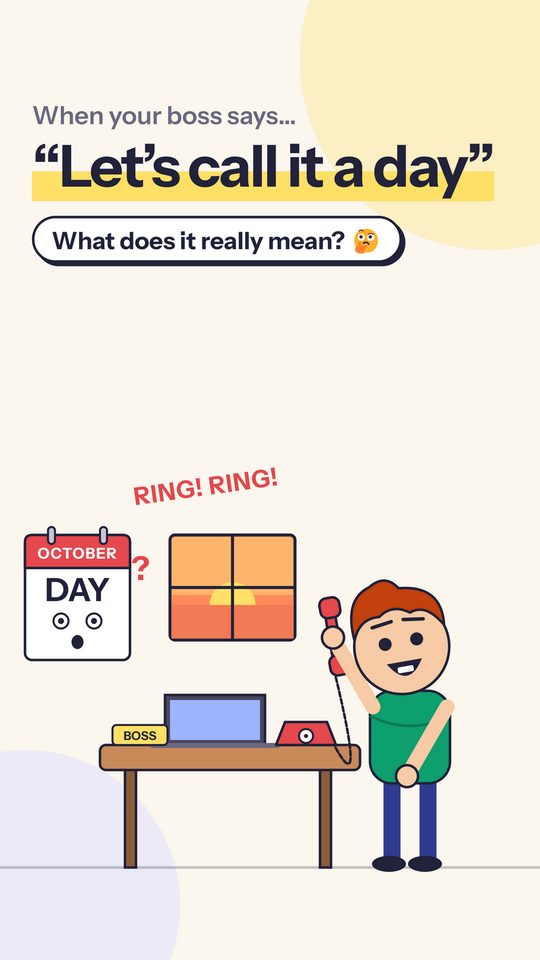
call it a day
/kɔːl ɪt ə deɪ/
= 今天到此為止,收工
短片內容
上司說:Great work today. Let’s call it a day! Peter 以為要打電話給一個叫 Day 的人,於是拿起電話一直打。到了晚上九點,他還在等 Day 接聽。
真正意思
這裡的 call 不是「打電話」,而是「稱為」。call it a day 字面上是「把它稱為一天」,意思是今天做的已經夠了,可以當作一天完結。
這句話用於決定停止工作,不一定是下班時間。例如做了一整個上午也可以說。
甚麼時候用
工作、溫習或做家務做到一個段落時用,語氣輕鬆。晚上可以說 call it a night。如果是長期的事,例如退休或結束生意,也可以說 call it a day,只是語氣比較感慨。
例句
- It’s 6 p.m. Let’s call it a day.
六點了,今天到此為止吧。 - We’ve finished the report, so I think we can call it a day.
報告做完了,我想今天可以收工。 - After 40 years, the owner decided to call it a day and closed the shop.
經營了四十年後,店主決定結業。
常見錯誤
✗ It’s 6 p.m. Let’s finish the day.
✓ It’s 6 p.m. Let’s call it a day.
finish the day 不是自然的說法。同事之間說「收工」,英文就用 call it a day。
近義說法
- wrap up 收尾、完成:指把工作做完,不一定代表今天停下來。
- call it a night 今晚到此為止:用於晚上,例如聚會或夜間工作。
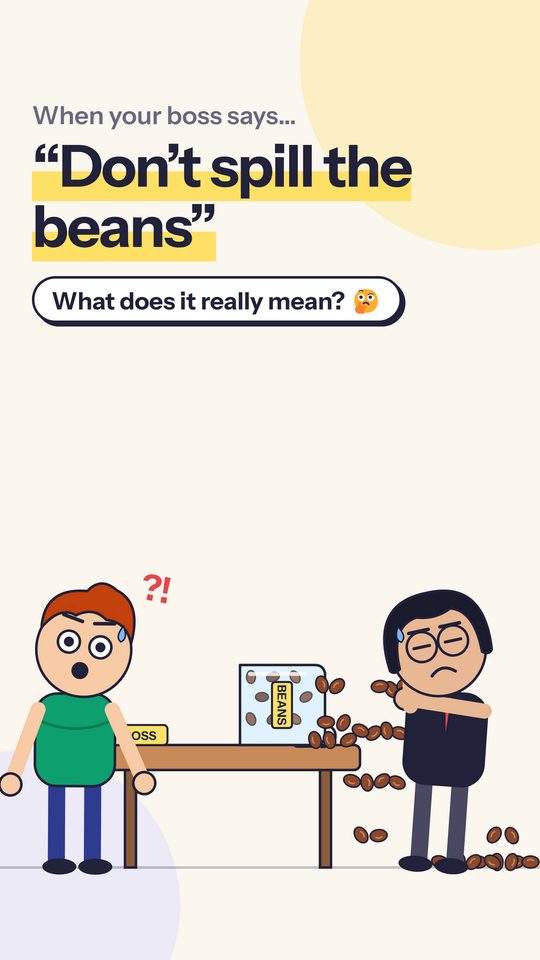
spill the beans
/spɪl ðə biːnz/
= 洩露秘密,太早說出來
短片內容
新辦公室是一個驚喜,上司叮囑 Peter:Don’t spill the beans! 他抱著一大罐豆子小心走路,結果全組同事都知道了新辦公室的事。Peter 還很自豪:「我一粒豆也沒有灑出來!」
真正意思
把豆子打翻,它們會滾得到處都是,想收回來也很難。秘密也一樣,一旦說了就收不回。
有人說這句話來自古希臘用豆子投票的做法,但這個說法沒有確實證據。記住「說出秘密」的意思就可以了。
甚麼時候用
生日驚喜、未公布的消息或八卦都可以用,語氣輕鬆,多用於口語。正式的工作文件不會用,要說 disclose 或 reveal。
例句
- Who spilled the beans about the party?
是誰說漏了派對的事? - Don’t spill the beans! It’s a surprise.
不要說出去!這是驚喜。 - He finally spilled the beans about his new job.
他終於說出了新工作的事。
常見錯誤
✗ Don’t spill the bean.
✓ Don’t spill the beans.
beans 一定是複數。這是固定片語,不可以改成單數。
近義說法
- let the cat out of the bag 不小心說漏嘴:更強調「不小心」,常用於驚喜被揭穿。
- give the game away 洩露計劃:指無意中讓別人知道計劃或真相。
under the weather
/ˈʌndə ðə ˈweðə/
= 身體有點不舒服
短片內容
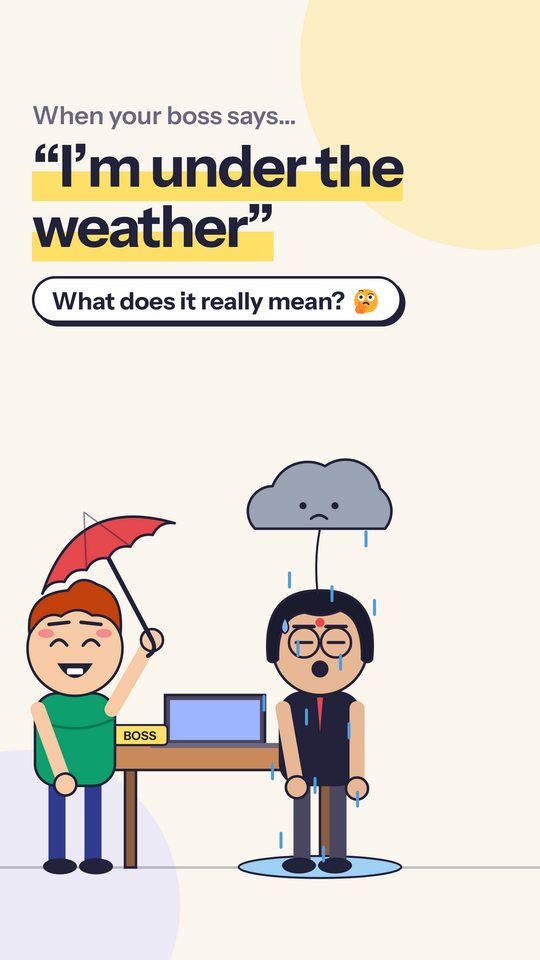
上司說:I’m feeling a bit under the weather. Peter 馬上弄來一朵烏雲,讓它在上司頭上下雨,還說:「現在你真的在天氣下面了!」上司打著噴嚏解釋,這句話的意思是她病了。
真正意思
under the weather 和天氣無關,是指身體有點不適,例如輕微感冒、頭痛或很疲倦。
一個流行的說法來自航海:水手暈船時會到甲板下休息,避開風浪。無論來源如何,今天它只表示「不太舒服」。
甚麼時候用
請病假或解釋狀態欠佳時很好用,語氣委婉,不用說明具體病情。只用於輕微不適,如果是嚴重疾病,就不適合這樣說。
例句
- I’m a bit under the weather, so I’ll work from home today.
我有點不舒服,今天會在家工作。 - You look under the weather. Do you need a break?
你看來不太舒服,要休息一下嗎? - She’s been under the weather all week.
她整個星期都不太舒服。
常見錯誤
✗ I’m under the weather because it’s raining.
✓ I’m a bit under the weather, so I’ll work from home today.
這句話和下雨無關,只表示身體不舒服。
近義說法
- feeling off 覺得不太對勁:更隨意,身體或精神不佳都可以用。
- coming down with something 快要生病:指病徵剛開始出現。
break the ice
/breɪk ðə aɪs/
= 打破僵局,讓初次見面的人放鬆交談
短片內容
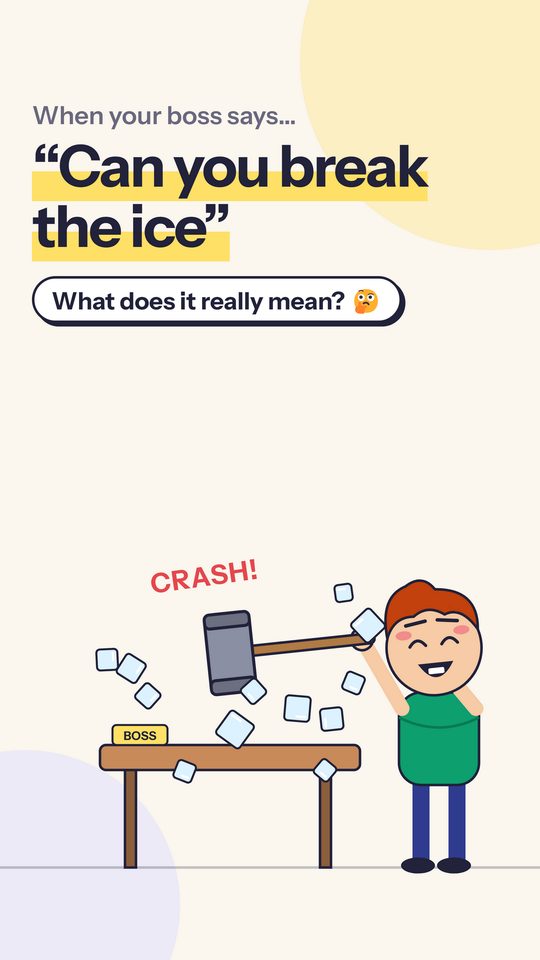
新客戶到了,上司請 Peter:Can you break the ice? Peter 拖來一把大鎚,把一大塊冰打碎,冰塊飛到全場。上司只好解釋,她是想 Peter 讓客戶放鬆,開始交談。
真正意思
想像初次見面時,房間裡的氣氛像結了冰一樣,大家都不說話。break the ice 就是打破這種尷尬。
這個比喻一般認為來自破冰船:船先把海上的冰打破,其他船才可以通過。第一句話也是這樣,說了之後,大家就容易交談。
甚麼時候用
用於會議開始、認識新朋友、團隊活動或約會。常見搭配是 an icebreaker(破冰活動),例如開會前的小遊戲。
例句
- Let’s break the ice with a quick game before the meeting.
開會前我們先玩個小遊戲,讓大家放鬆一下。 - He told a funny story to break the ice.
他說了個有趣的故事來打破僵局。 - A simple “Where are you from?” can break the ice.
一句簡單的「你來自哪裡?」就可以打開話題。
常見錯誤
✗ She told a joke to break the silence ice.
✓ She told a joke to break the ice.
這是固定片語,不用加其他字。另有 break the silence(打破沉默),是另一個說法,不要混在一起。
近義說法
- warm up the room 令氣氛熱起來:多用於演講或活動開場。
- start the conversation 開始對話:最直接的說法,沒有比喻。
put a pin in it
/pʊt ə pɪn ɪn ɪt/
= 暫時不談,稍後再回來討論
短片內容
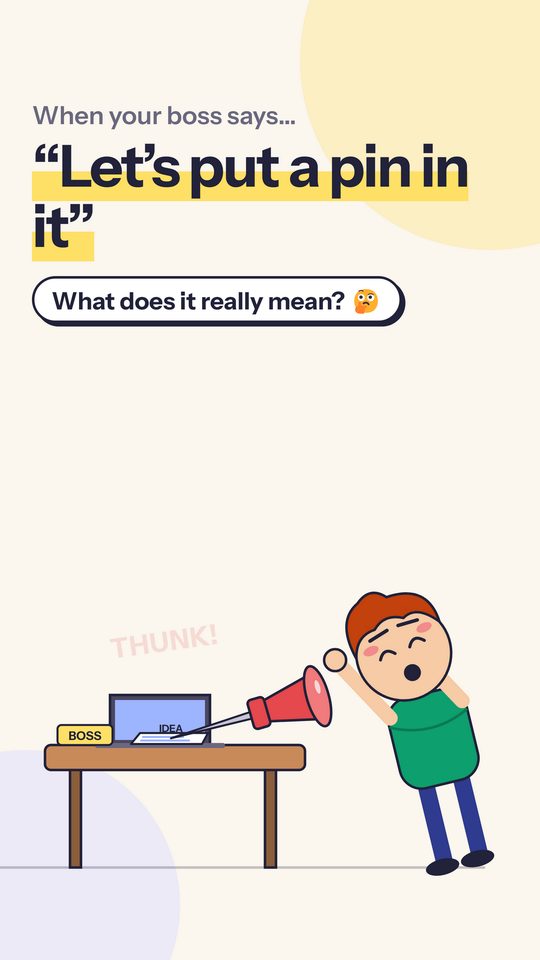
上司說 Peter 的想法不錯,但 let’s put a pin in it for now。Peter 拿來一根巨型大頭針,一下子把報告釘穿,還說:「你的想法被釘住了,跑不掉的!」
真正意思
想像你把一張筆記用圖釘釘在壁報板上:現在不處理,但它留在那裡,以後看到就會記起。
所以 put a pin in it 表示這個話題值得討論,只是現在不是時候。它比直接說「不要談這個」客氣得多。
甚麼時候用
開會時最常用,尤其是有人提到題外話,或時間不夠的時候。可以加上時間:put a pin in it until next week。之後要重提時,可以說 Let’s come back to the idea we pinned.
例句
- Good point, but let’s put a pin in it until next week.
說得好,不過我們下星期再談吧。 - We’re short of time, so I’ll put a pin in that.
時間不夠,這點我們稍後再說。 - Can we put a pin in it and come back after lunch?
我們可以先放下,午飯後再談嗎?
常見錯誤
✗ Let’s put a pin on it.
✓ Let’s put a pin in it.
介詞要用 in。這是固定片語,說 on 聽起來不自然。
近義說法
- come back to it later 稍後再談:直接易明,任何場合都可以用。
- table it 暫緩討論:要小心:美式英文指「押後」,英式英文卻指「提出討論」。
think outside the box
/θɪŋk ˌaʊtˈsaɪd ðə bɒks/
= 跳出框框,想出新穎有創意的點子
短片內容
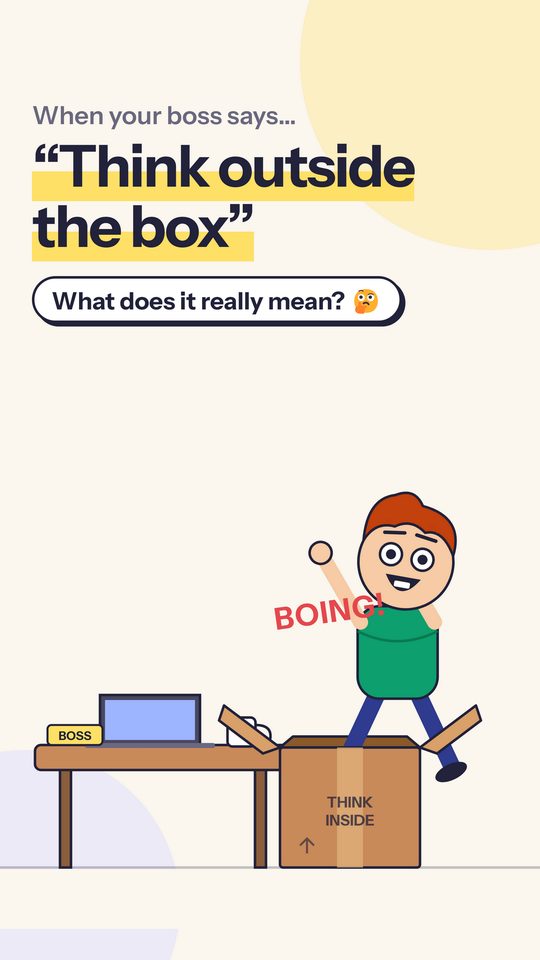
上司需要新點子:Think outside the box! Peter 走進一個大紙箱,再破箱而出,得意地宣布自己正式在箱子外面了。他還問上司,要不要回到箱子裡去。
真正意思
這裡的 box 是指平常的思考方式和習慣。think outside the box 就是不受這些限制,用新角度看問題。
一般認為這句話和一個著名的「九點謎題」有關:要一筆連起九個點,線必須畫到點陣以外才能解開。
甚麼時候用
腦力激盪或尋找新方法時用,語氣正面。但這句話用得太多,有些人覺得它是陳腔濫調。在正式文件或求職信中,說 creative 或 innovative 會更好。
例句
- We need to think outside the box to win this client.
我們要跳出框框,才能贏得這位客戶。 - Her ideas are great because she thinks outside the box.
她的想法很好,因為她不受框框限制。 - Let’s think outside the box and try something new this year.
今年我們跳出框框,試試新方法吧。
常見錯誤
✗ We need to think out of box.
✓ We need to think outside the box.
要加上 the。英式英文也有人說 think out of the box,但同樣要有 the。
近義說法
- think creatively 有創意地思考:沒有比喻,最直接,也較正式。
- think differently 用不同方式思考:簡單易明,適合任何場合。
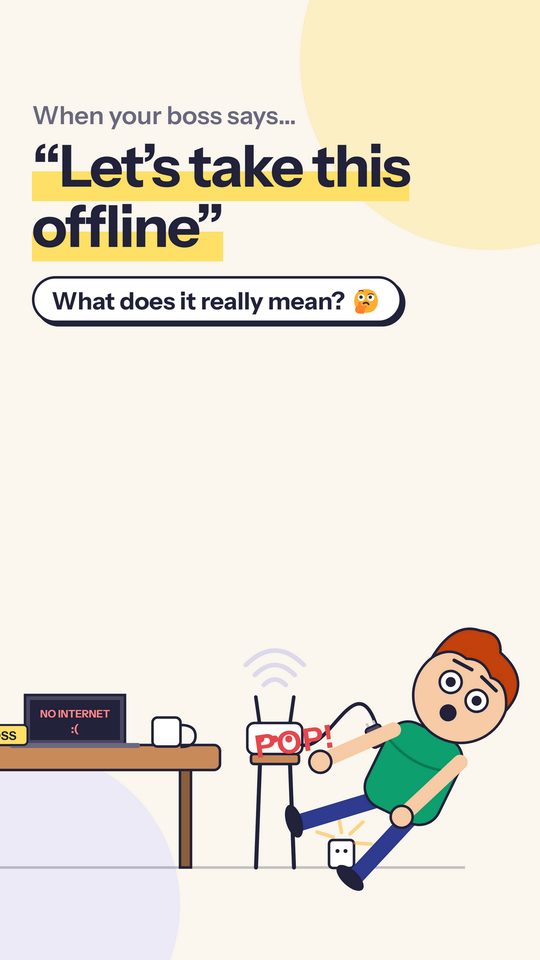
take it offline
/teɪk ɪt ˌɒfˈlaɪn/
= 會後再私下討論,不在這次會議上談
短片內容
會議時間到了,上司說:Let’s take this offline. Peter 立刻把路由器的電源拔掉,全公司都斷了網。上司只好解釋,她的意思是稍後再談。
真正意思
offline 本來是「離線」。但在會議裡,「線上」指正在進行的會議,所以 take it offline 就是把話題帶到會議以外,和有關的人另外討論。
這句話不是說「不談了」,而是「這裡不適合談」,通常因為話題太細、只關乎幾個人,或者時間不夠。
甚麼時候用
開會時有人討論得太深入,或者兩個人開始爭論時最常用。主持會議的人可以這樣說:Let’s take this offline after the call. 這樣既可以繼續會議,又不會顯得不理對方。
例句
- Good point. Let’s take this offline after the call.
說得好,我們會後再談。 - This is getting detailed, so let’s take it offline.
這部分太仔細了,我們另外再討論吧。 - Can we take that offline? It only affects our team.
我們可以私下再談嗎?這只影響我們的團隊。
常見錯誤
✗ Please take this offline. I don’t want to discuss it again.
✓ Let’s take this offline and discuss it after the meeting.
take it offline 不是拒絕討論,而是換個時間,和相關的人再談。
近義說法
- discuss it separately 另外討論:較正式清楚,適合電郵。
- talk about it after the meeting 會後再談:最簡單的說法,沒有職場術語。
DictionifyChrome 擴充功能
下次在網上看到不明白的英文?
在任何網頁雙擊英文字,Dictionify 會閱讀整句,告訴你它在這一句的意思,附中文翻譯、發音和例句。升級 Pro 可無限查字和翻譯,並使用 Summary 摘要和 Polish 潤飾。
加到 Chrome- Pro:無限查字和翻譯
- Summary 摘要、Polish 潤飾
- 登入即試用 Pro 7 天