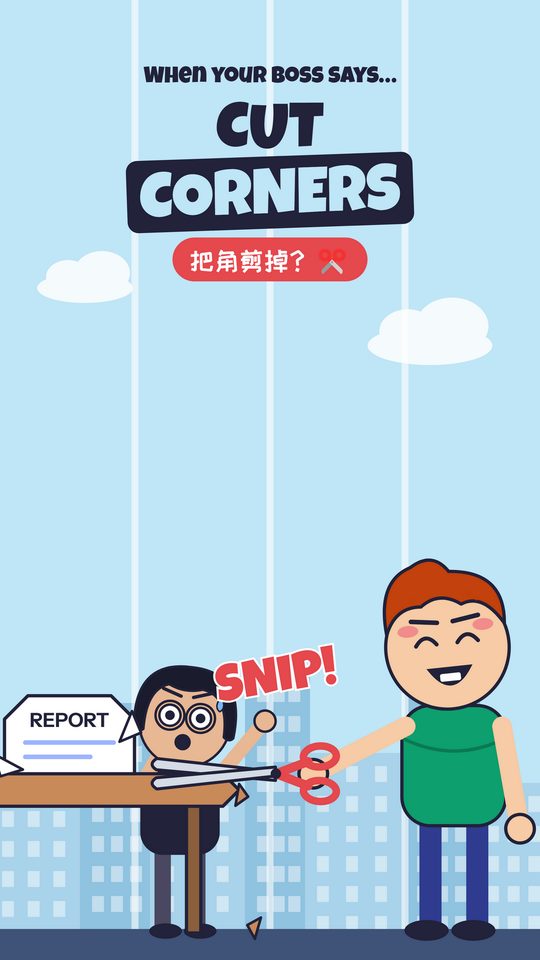
cut corners
/kʌt ˈkɔːnəz/
to do something in the quickest or cheapest way, skipping steps you should take
In the video
The boss is in a hurry and tells Peter to cut some corners and finish quickly. Peter takes it literally: he grabs giant scissors and snips the corners off her desk, her nameplate and the report. The boss shouts, “You cut up my DESK!”
What it really means
The picture comes from walking or driving: instead of following the road around a corner, you cut straight across it. The trip is shorter, but you have broken the rules. “Cut corners” uses that picture for work: you do things faster or more cheaply by skipping steps you should take.
It is usually negative, because it suggests the quality suffers, such as rushed safety checks or cheaper materials. You often hear it as “don’t cut corners”, a reminder not to trade quality for speed.
When to use it
Use it when talking about rushing, tight budgets or poor quality. Common patterns are “cut corners”, “cut corners on something” and “don’t cut corners”. It usually sounds critical; when people say it about themselves, they are admitting the work wasn’t done properly.
Examples
- Don’t cut corners on safety.
- The builders cut corners, and now the roof leaks.
- We can’t cut corners on this report. The client will read every page.
Common mistake
✗ We cut corners, so the project is perfect.
✓ We cut corners, so the project has some problems.
“Cut corners” is not praise for working efficiently. It means steps were skipped and the result is usually worse. To praise someone for being quick, say they worked efficiently.
Similar phrases
- take shortcuts find a quicker way, which is not always negative
- do a half-hearted job do something without real effort or care