pull some strings
/pʊl sʌm strɪŋz/
to use your connections or influence to get something done
In the video
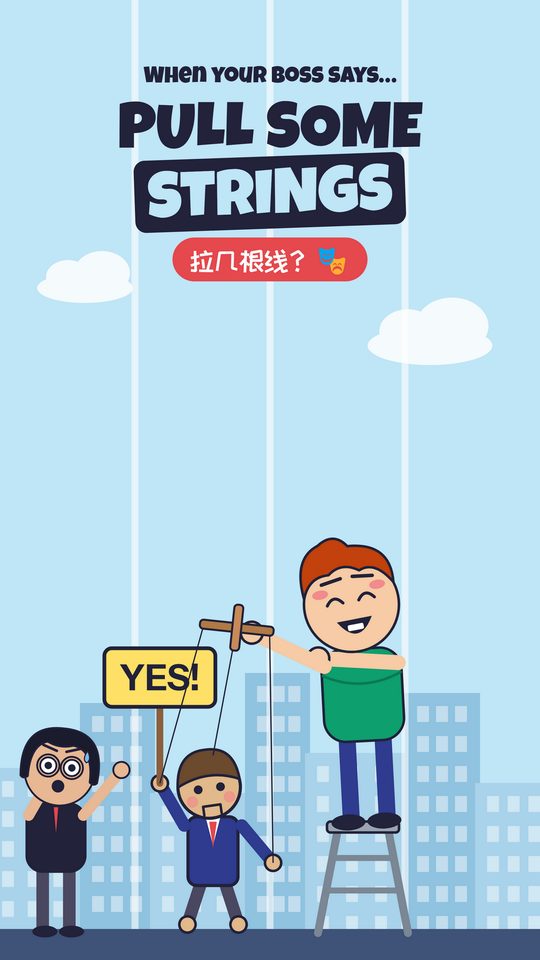
The boss needs to win a big client and asks Peter to pull some strings. Peter takes it literally: he stands on a stepladder and works a client puppet that holds up a “YES!” sign, then tells the boss the good news. The boss shouts, “That is a puppet!”
What it really means
The picture comes from puppet theatre. A puppeteer pulls strings out of sight, and the puppet on stage moves. “Pull some strings” uses that picture for people: you quietly ask someone you know for help, and things start to happen.
It means using your connections or influence to get something that is normally hard to get, such as a ticket, a job or a table. It isn’t always bad, but it can sound like getting special treatment, so people often use it jokingly among friends and carefully in formal settings.
When to use it
Use it when a friend or coworker needs help and you know someone who can make it happen. Common patterns are “pull some strings”, “pull a few strings” and “pull some strings for someone”. The tone is casual, so avoid it in formal writing.
Examples
- She pulled some strings to get us a table.
- My uncle pulled a few strings and got me an interview.
- Can you pull some strings for me? The tickets are sold out.
Common mistake
✗ She pulled the strings to get us a table.
✓ She pulled some strings to get us a table.
“Pull the strings” means to secretly control a situation, which is different. To say you used your connections, use “pull some strings” or “pull a few strings”.
Similar phrases
- call in a favour ask someone who owes you a favour to help you
- have connections know people with influence, without having asked them for anything yet