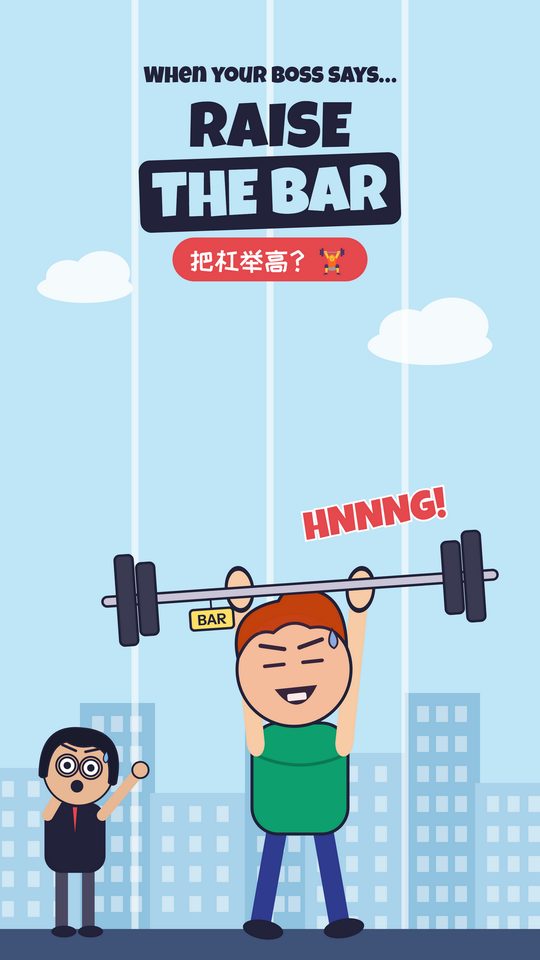
raise the bar
/reɪz ðə bɑː/
to set a higher standard, so that everyone has to do better
In the video
A rival’s new app is great, and the boss says they need to raise the bar. Peter takes it literally: he carries a barbell into the office and, sweating hard, presses it high over his head. The boss shouts, “Why is there a barbell in my office?!” and the bar crashes to the floor, CLANG.
What it really means
The phrase comes from the high jump and pole vault: athletes jump over a bar, and each time they clear it, the bar is raised a little, so the next jump is harder.
At work or in life, raising the bar means setting a higher standard or expectation, so you, your team or a whole industry must do better. When someone does especially well, you can say they raised the bar: they set a higher standard for everyone else.
When to use it
Use it when talking about better quality, performance or expectations. Common patterns are “raise the bar”, “raise the bar for someone” and “set the bar high”. It sounds positive and is common at work, in sport and in product reviews.
Examples
- Her great work really raised the bar for the team.
- This new phone raises the bar for battery life.
- We need to raise the bar if we want to win.
Common mistake
✗ The test was too hard, so the teacher raised the bar.
✓ The test was too easy, so the teacher raised the bar.
“Raise the bar” means asking for more. If you want to make the standard easier, say “lower the bar”.
Similar phrases
- up your game work harder to do better yourself
- set the bar high set a high standard from the start