take it offline
/teɪk ɪt ˌɒfˈlaɪn/
to talk about something later, outside the meeting, with only the people who need to be there
In the video
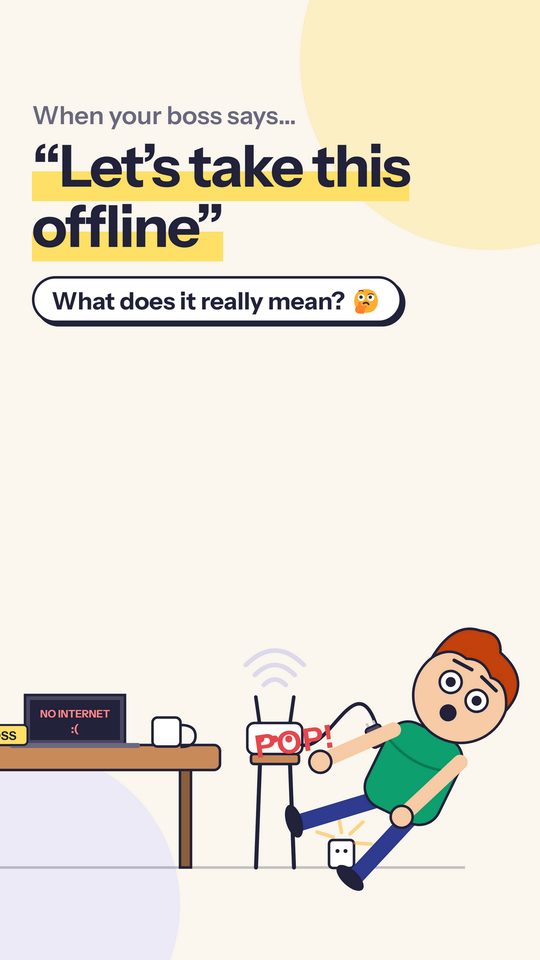
The meeting is out of time, and the boss says: “Let’s take this offline.” Peter pulls the plug on the router, and the whole office loses the internet. She explains that she only meant they should talk about it later.
What it really means
“Offline” usually means “not connected to the internet”. In a meeting, though, being “online” means being in the main discussion. So taking something offline means moving it out of the meeting, to talk about it with the right people.
It doesn’t mean “let’s not talk about it”. It means “this isn’t the right place”, usually because the topic is too detailed, only matters to a few people, or there isn’t enough time.
When to use it
It is most common when a meeting gets too detailed or two people start to argue. The person leading can say “Let’s take this offline after the call.” The meeting moves on, and nobody feels ignored.
Examples
- Good point. Let’s take this offline after the call.
- This is getting detailed, so let’s take it offline.
- Can we take that offline? It only affects our team.
Common mistake
✗ Please take this offline. I don’t want to discuss it again.
✓ Let’s take this offline and discuss it after the meeting.
It isn’t a way to refuse to talk. It means talking at another time, with the right people.
Similar phrases
- discuss it separately to talk about something in a separate discussion; clear and a little formal, good for email
- talk about it after the meeting the simplest way to say it, with no office jargon